

Proactive Threat Detection: How Edge AI Secures Surveillance Systems
Surveillance refers to systemic observations of locations or people to gather information. The information gathered by surveillance contributes to law enforcement and national security. Because it concerns the safety and livelihood of many people, implementing surveillance solutions with utmost care is important. Relying on systems that do not work effectively would lead to missing signals and being overconfident about wrong data.
Artificial intelligence enhances surveillance, enabling analyzing large bodies of data that would otherwise be impossible, or extremely costly and time consuming, to disseminate. With the help of AI, surveillance becomes better for everyone thanks to the time, cost and resources saved by making the switch.
Edge AI solutions are preferred when implementing AI in surveillance. Now, let’s take a look at what Edge AI is.
What is Edge AI?
To understand edge AI, we first need to define edge computing. Edge computing is a computing model where devices in remote locations collect and process data at the edge of the network, the location the system is. If data needs to be processed in the main server, edge computing systems send the needed parts, rather than whole of it. This way, edge computing systems work without facing latency issues. In critical missions, reducing latency is the key.
Edge AI is basically artificial intelligence running in edge computing systems. NVIDIA defines edge AI as “deployment of AI applications in devices throughout the physical world”. With the help of edge AI, it is possible to develop AI-based solutions that can work in anywhere, anytime. From healthcare to surveillance, edge AI offers many opportunities for real-time data processing, reduced latency, improved privacy, and reliable operation in environments with limited or no network connectivity.
Definition of Surveillance
Surveillance is basically the systematic process of observing, monitoring, and collecting information about individuals, groups, or environments. The aim of surveillance is to understand behavior, detect events or ensure safety and security. It often involves the use of technologies such as cameras, sensors, databases and communication systems to gather data continuously or over a period of time.
In modern contexts, surveillance increasingly relies on digital and AI-based systems to analyze large volumes of data efficiently and in real time. These systems are widely used in areas such as law enforcement, public safety, healthcare, and urban management, helping organizations identify risks, prevent incidents and support informed decision-making.
Surveillance systems require precision, high processing capabilities, constant attention and rapid action capacity to work efficiently. Without one of these properties, surveillance systems would fail to provide people with safety and security. Surveillance is demanding and this is why edge AI solutions are perfect for it. Being able to process data 24/7 and make decisions real-time, edge AI enhances surveillance, making sure it meets everyone’s needs.
Complex Surveillance Systems and Edge AI
Cities are enormous structures with countless components, each running in their own ways while also being in harmony with one another. A city dweller needs her basic utilities, transportation, food, entertainment or cultural activities planned and brought to her. Making the system work as a whole aside, it is even difficult to plan each component in a way that makes it accessible, interesting and sustainable. This is where artificial intelligence infrastructure networks come in.
Making a city work needs sensing, analyzing and responding in a quick, timely manner to ensure every step of urban planning is running as intended. This requires data collection, dissemination and decision making. Artificial intelligence infrastructure networks can be integrated in every part of this process. With the help of AI, it is possible to connect infrastructure, improve efficiency and enhance public safety with ease.
How to Implement Edge AI Surveillance?
To implement artificial intelligence surveillance systems, you can use carrier boards or industrial PCs, depending on your needs. With FORECR carrier boards and industrial PCs, powered by top-notch processors like NVIDIA® JETSON AGX ORIN™, NVIDIA® JETSON AGX THOR™ and others, you can benefit from AI’s power to enhance and deploy your AI based surveillance applications.
Carrier boards, offering high computing capacity, diverse connectivity options and support for peripherals like cameras or sensors, make it possible to build surveillance systems that last. Industrial PCs, with their endurable form, can withstand dust, wetness, vibrations, shock and other environmental factors. Depending on the requirements of your project, FORECR can provide you with the best hardware needed.
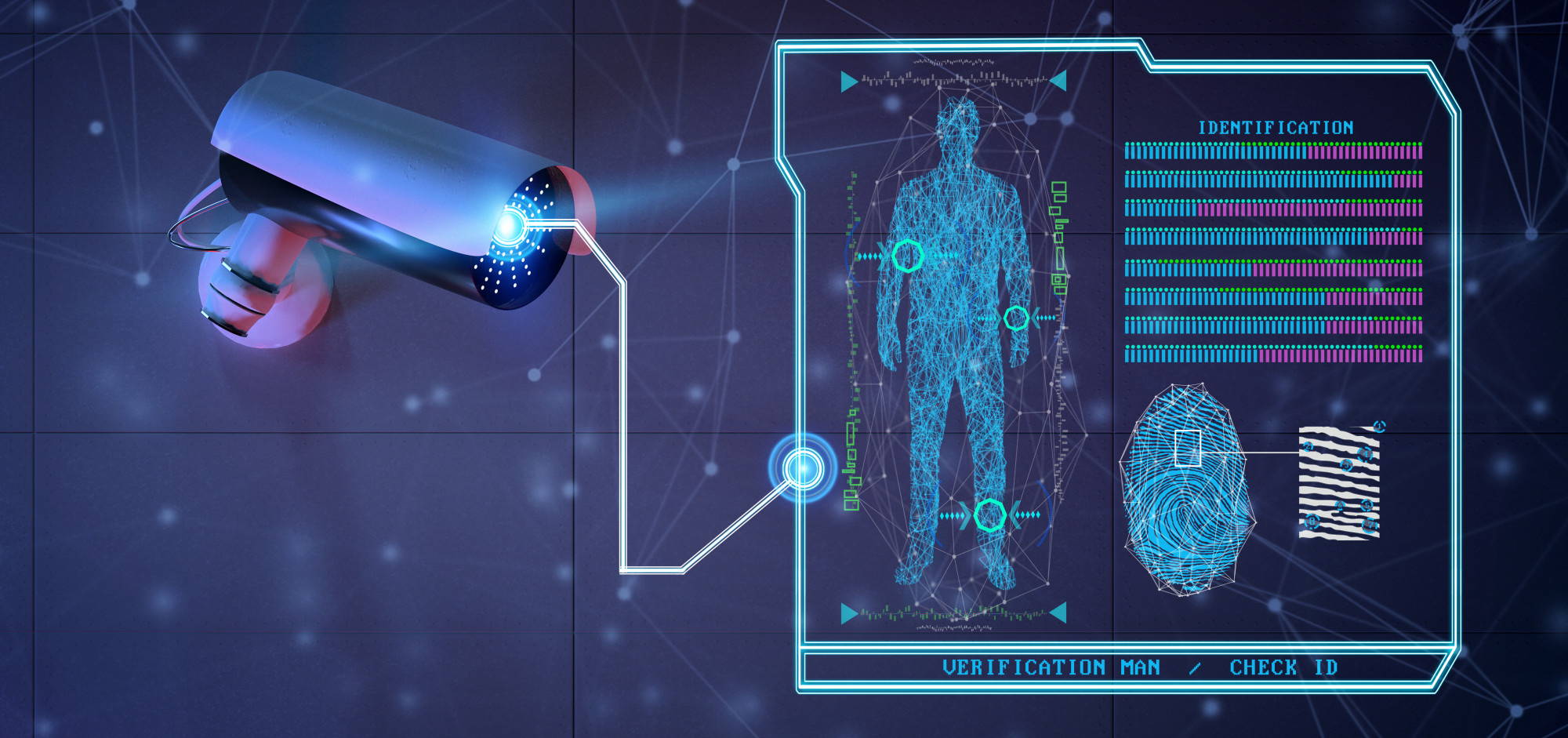
Real Life AI Surveillance Applications
FORECR’s products have already been deployed in real-life security and surveillance projects. MILBOX-AGX, powered by NVIDIA Jetson AGX Orin is used in Airbus’ intelligence-surveillance-reconaissance applications. In Airbus unmanned aerial vehicles, our fanless rugged computer provides airborne image processing capabilities for object detection and recognition in real-time video streams.
The collaboration between QRO Solutions and FORECR is another example of edge AI in surveillance and security. In this project, FORECR provided QRO Solutions with carrier boards powered by NVIDIA processors to enhance their automatic number plate recognition systems.
Last but not least, HIGHTEK & FORECR success story shows how edge artificial intelligence can be used for security surveillance, search and rescue, disaster management. HIGHTEK’s integrated airborne and ground-based systems equipped with multi-camera, LiDAR, and communication modules detect, map and monitor emergencies such as wildfires, maritime rescues and many more.
Recommended Products
DSBOARD-AGXMAX, powered by NVIDIA Jetson AGX Orin, is engineered for high-throughput, low-latency edge AI workloads where both performance and connectivity are critical. With up to 275 TOPs of AI performance, it is well suited for demanding industrial use cases and is reinforced by a robust, industrial-grade design. DSBOARD-ORNX further combines edge AI performance with industrial reliability and extensive field connectivity, making it ideal for modern power, utility, and energy infrastructure applications. It supports a wide operating temperature range from –25°C to +85°C, features industrial-grade power input, and offers a high mean time between failures of approximately 20 years, ensuring dependable long-term deployment.
DSBOX-AGX is a rugged, fanless industrial system built to support NVIDIA Jetson AGX Orin. Designed with durability in mind, it is well suited for use in both the surveillance and security sector and other demanding environments. The industrial PC offers flexible configuration options, including different system-on-module choices, industrial SSD capacities, and connectivity integrations, ensuring compatibility with a wide range of project requirements. For applications that require high-speed networking, DSBOX-AGXMAX is available with enhanced 10G connectivity. If greater AI performance is needed, DSBOX-THRMAX is an excellent alternative, delivering up to 2070 FP4 TFLOPS of AI compute along with 128 GB of memory.
Need help?
Frequently Asked Questions
