

AI at the Edge: Surveillance and Defense Use Cases
We are continuing our series where we show real-life use cases of edge artificial intelligence systems from different sectors. From robotics to industrial automation, edge AI is being deployed in a wide range of tasks. As the technology develops, embedded systems get more and more advanced, allowing state-of-the-art models to be implemented right where the data is. In this part of the series, we are focusing on defense applications, where durable hardware must be accompanied with the most advanced software to ensure reliable data processing, real-time decision making, and mission-critical performance in challenging operational environments. Let’s start with defining what edge AI.
What are Edge AI Systems?

In this age where technology is everywhere, almost everyone is using artificial intelligence. From getting the AI to write code to deploying agents for complex workflows, most of us resort to cloud-based AI solutions for our daily needs. However, not all applications can rely on the cloud. Many industries require AI systems that can process data instantly, operate in remote environments and maintain strict data security. This is where edge AI systems come into play.
Edge AI refers to the deployment of artificial intelligence models directly on devices located close to where the data is generated. Instead of sending raw data to a home server, waiting for the AI to complete its task then send the results backs, edge AI systems analyze and make decisions locally on embedded computers, industrial PCs or specialized AI hardware.
Edge AI’s capacity to work without being connected to a server to deploy artificial intelligence is critical in a wide range of sectors. In defense and aerospace, systems often operate in environments where connectivity is limited or unreliable. Edge AI enables real-time processing of sensor data, video feeds and mission-critical information directly on the device, allowing instant decision-making and improved operational autonomy.
Benefits of Edge AI in Defense & Aerospace
As mentioned, edge AI systems do not require to be connected to work. This is especially critical in defense, aerospace, security and surveillance applications for several reasons. First of all, interruptions in network connectivity can have a devastating impact on mission-critical operations. Systems that rely on continuous communication with remote servers may experience delays or failures if the network becomes unstable, congested or intentionally disrupted. By processing data locally, edge AI systems ensure that essential functions such as threat detection, navigation and target tracking continue to operate without interruption.
Another important factor is response time. In many defense scenarios, decisions must be made in not only seconds but milliseconds. Communicating back and forth with a cloud can introduce latency that would slow down the decision-making process in critical moments. Edge AI eliminates this delay as embedded systems ensure that essential functions can run without cloud connectivity.
Finally, data security is critical when it comes to defense and aerospace applications. Sensitive data must be protected from interception or cyber threats to prevent adversaries from gaining access to critical intelligence or operational details. If data is continuously sent and received, it can be intercepted. Edge AI helps mitigate these risks by processing and analyzing data directly on the device where it is generated. This reduces the need to transfer sensitive information over external networks and keeps mission-critical data within secure systems.
How is Edge AI Implemented in Defense & Aerospace?
It is possible to deploy edge AI with reliable hardware capable of running the desired algorithms. These can be carrier boards, industrial computers and ruggedized PCs, which are built for exactly this purpose. You can choose the ideal hardware for your project based on the technical specifications or get custom military hardware services to ensure your needs are met.
Rugged computers are engineered for the toughest conditions, making them particularly suitable for defense and aerospace environments. Unlike standard computing systems, ruggedized computers are designed to withstand extreme temperatures, shock, vibration, dust and humidity. This durability allows them to operate reliably in demanding field conditions such as airborne systems, ground vehicles, naval platforms and remote surveillance stations.
Edge AI Use Cases in the Real World (Part 3)
Defense sector always follows the technology and keeps up with the latest innovations to ensure operational superiority, improved situational awareness and mission success. As modern threats become more complex, so do the systems built against them. In today’s world, deploying artificial intelligence, autonomous systems and edge computing has become essential for maintaining strategic advantages. In this part, we will take a look at how the defense sector employs edge AI.
Defense & Aerospace at the Edge
Defense and aerospace require power, precision and accuracy. With the help of edge AI, military systems become more effective, accurate and capable of making real-time decisions directly at the source of data. Real life edge AI applications of military technologies are as follows:
• Multi-vehicle collaboration (Teaming Intelligence): Refers to multiple autonomous or semi-autonomous systems, such as drones, ground vehicles, or naval platforms, working together and sharing data to accomplish a mission. Edge AI enables these platforms to coordinate actions, distribute tasks and respond collectively to dynamic situations without relying on constant communication with a central control system.
• ATR (Automatic Target Recognition): Automatic Target Recognition (ATR) uses AI and computer vision algorithms to automatically detect, classify and track objects of interest from sensor data such as radar or camera feeds. By running these models at the edge, defense systems can quickly identify potential threats and support faster decision-making in surveillance and combat scenarios.
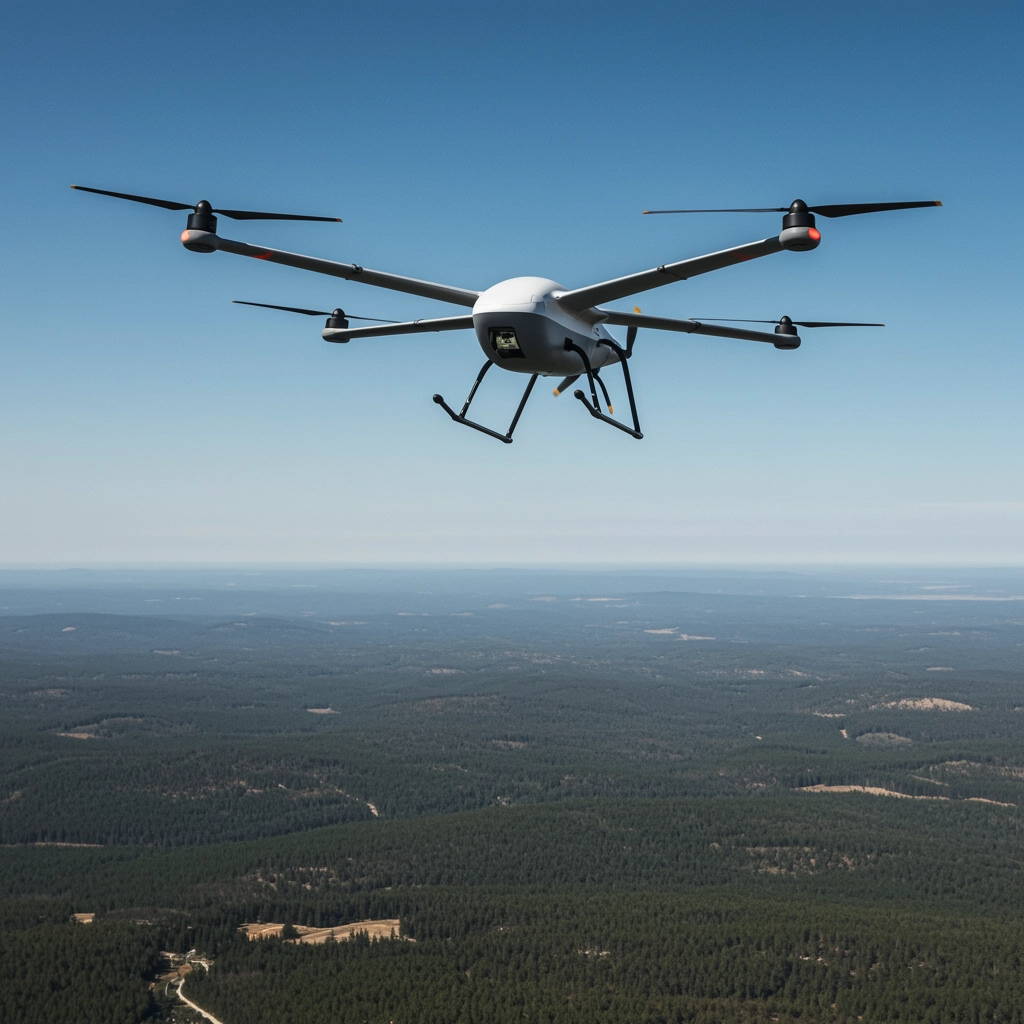
• Mission computer for ground vehicles: A mission computer is a central computing unit installed in military ground vehicles to manage data processing, navigation, communication and system coordination. With edge AI capabilities, it can process sensor inputs, support autonomous functions and provide real-time situational awareness to vehicle operators.
• Radar, EO/IR image sensor fusion: Sensor fusion combines data from radar and electro-optical/infrared (EO/IR) sensors to create a more accurate and comprehensive understanding of the environment. Edge AI helps process and merge these different data streams in real time, improving object detection, tracking accuracy and overall battlefield awareness.
• Real-time flight data analytics: Real-time flight data analytics involves continuously analyzing telemetry and sensor data from aircraft during flight operations. Edge AI systems can process this information instantly to detect anomalies, monitor performance and support faster operational decisions without relying on remote processing.
• ISR operations at the Edge: ISR (Intelligence, Surveillance, and Reconnaissance) operations involve collecting and analyzing information from various sensors to monitor activities and identify potential threats. Edge AI allows ISR systems to process data directly on platforms such as drones or remote stations, enabling faster intelligence generation and reducing the need to transmit large volumes of raw data.
Defense industry and aerospace applications require rugged design, high computational performance, seamless integration and real-time processing.
Security & Surveillance at the Edge
Security and surveillance ensure people’s lives are free of unwanted situations by preventing them even before they occur. Continuous monitoring, threat detection and swift responses allow systems to identify anomalities, protecting people. By processing data at the edge and making real-time decisions, edge AI systems provide the compute capacity and swiftness high performing security & surveillance systems need. Here are some examples of edge AI security real life use cases:

• Crowd and Queue Management: Edge AI systems analyze video feeds in real time to monitor crowd density, movement patterns, and queue lengths in public or restricted areas. This helps security teams manage congestion, improve safety, and respond quickly to abnormal crowd behavior.
• Intelligent Surveillance Towers: Intelligent surveillance towers use edge AI to process video and sensor data directly on-site for continuous monitoring of large areas. These systems can automatically detect events, track movement, and alert operators without requiring constant human supervision.
• Asset and Equipment Tracking: Edge AI enables the monitoring and tracking of valuable assets, vehicles, or equipment using cameras, sensors, or RFID systems. By analyzing data locally, these systems can provide real-time updates on asset location and usage while improving operational efficiency and security.
• Suspicious Behavior Analytics: AI-powered behavior analytics systems analyze movement patterns and actions captured by surveillance cameras to identify unusual or potentially threatening behavior. Running these algorithms at the edge allows security teams to receive immediate alerts and respond quickly to potential risks.
• Area Intrusion Detection: Edge AI systems can monitor restricted zones and automatically detect unauthorized entry using video analytics and motion detection. When an intrusion is detected, the system can trigger alarms, notifications, or automated responses in real time.
• Facial Recognition: Facial recognition technology uses AI models to identify or verify individuals by analyzing facial features captured by cameras. Deploying these models at the edge allows rapid identity checks and access control while reducing the need to send sensitive biometric data to remote servers.
Customer Use Cases
FORECR’s collaborations with several industry professionals showcase how edge AI can be implemented in surveillance and defense applications. Below are details on different projects, how FORECR has contributed to their success and the outcomes of collaborations.
- FORECR and Airbus
- FORECR and QRO Solutions
- FORECR and HIGHTEK
Airbus Defence and Space partnered with FORECR to deploy a rugged edge AI system for real-time image processing in UAV-based Intelligence, Surveillance, and Reconnaissance (ISR) missions. The project required high computational performance in harsh airborne environments, where systems must withstand extreme vibrations and temperature variations while processing Full-HD and 4K video streams with minimal latency. The goal was to enable accurate, real-time object detection and recognition to support mission-critical decision-making.
FORECR addressed these challenges by integrating its MILBOX-AGX, powered by NVIDIA Jetson AGX Orin, a rugged, fanless, and military-grade computing platform. The solution delivered high GPU performance for AI workloads and seamlessly integrated with Airbus’ existing NVIDIA-based ecosystem, leveraging DeepStream, TensorRT, and CUDA for optimized video analytics and inference. This enabled reliable, low-latency processing directly at the edge, ensuring continuous performance even in demanding operational conditions.

As a result, Airbus successfully deployed a high-performance ISR image processing system that improved situational awareness and operational efficiency. FORECR’s contribution ensured durability, real-time analytics, and timely delivery, making it possible to extract actionable intelligence from live UAV feeds. The collaboration highlights FORECR’s strength in delivering robust, high-performance AI hardware solutions tailored for extreme aerospace environments.
QRO Solutions partnered with FORECR to enhance its Automatic Number Plate Recognition (ANPR) and surveillance systems for real-time, operator-free vehicle monitoring across intelligent traffic and emergency service applications. The objective was to improve performance, reliability, and scalability while ensuring accurate data processing in both outdoor and in-vehicle environments. QRO’s systems, such as NASBox and QBOX, required robust computing capabilities to process high-definition video streams and deliver actionable insights without manual intervention.
FORECR addressed these needs by providing high-performance carrier boards integrated with NVIDIA Jetson modules, enabling efficient real-time ANPR processing. The solution delivered industrial-grade durability suitable for harsh conditions, along with seamless scalability to support future upgrades and diverse deployment scenarios. By leveraging NVIDIA’s processing power, QRO’s systems achieved reliable, low-latency performance while maintaining compatibility with existing ANPR management platforms.

As a result, QRO Solutions improved the efficiency and accuracy of its ANPR systems, enabling cost-effective, operator-free surveillance with minimal downtime. FORECR’s hardware enhanced real-time data processing, ensured long-term reliability in demanding environments, and provided the flexibility to scale and adapt to evolving use cases. This collaboration strengthened QRO’s ability to deliver high-performance, intelligent traffic and surveillance solutions.
Hightek partnered with FORECR to develop AI-powered multi-sensor systems for disaster response, search and rescue, and critical infrastructure protection. The project focused on deploying airborne and ground-based platforms equipped with cameras, LiDAR, and communication modules to deliver real-time, actionable intelligence in high-pressure environments. The key challenge was managing large volumes of sensor data while ensuring reliable performance in harsh, vibration-heavy conditions, where traditional systems often lacked the required processing power, ruggedness, and integration speed.
FORECR enabled this by providing NVIDIA Jetson-based hardware with high-performance carrier boards and high-speed cable interfaces, allowing seamless integration of multi-sensor payloads and real-time AI processing. The solution supported onboard analytics using frameworks like DeepStream, TensorFlow, and YOLO, enabling detection, tracking, and classification directly at the edge. Its rugged, modular design ensured reliable operation across helicopters, drones, and unmanned vessels, while real-time data streaming—including satellite connectivity—allowed instant transmission of insights to command centers.
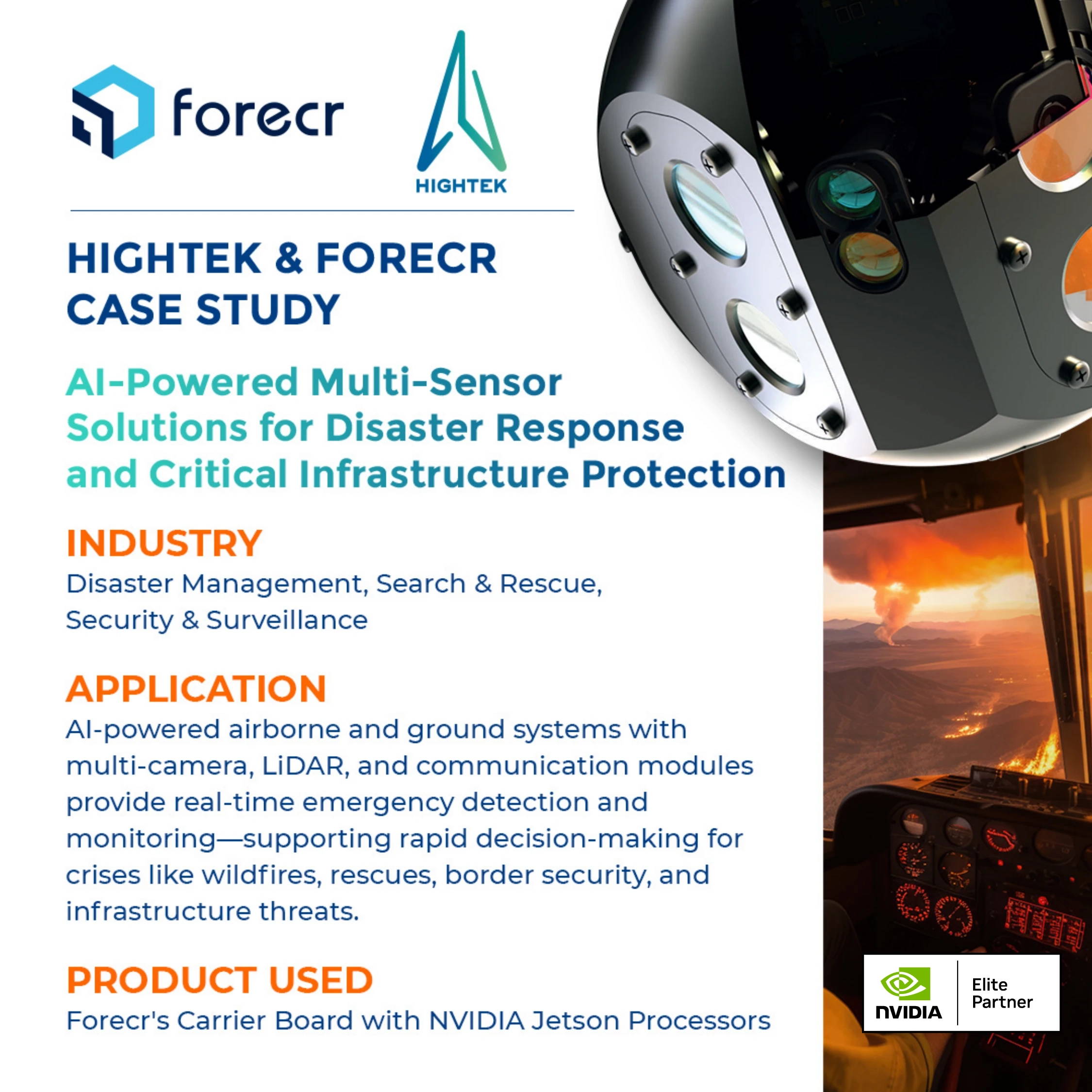
As a result, Hightek successfully deployed scalable, AI-driven monitoring systems across multiple mission-critical scenarios, including wildfire detection, maritime rescue, and border security. FORECR’s hardware reduced development time, improved operational efficiency, and ensured reliable performance in extreme environments, enabling faster decision-making and enhanced safety for first responders. The collaboration highlights FORECR’s role in delivering robust, flexible edge AI solutions for complex, real-world applications.
Recommended Hardware
Edge AI can be effectively implemented using dependable hardware designed to run advanced algorithms. This includes solutions such as carrier boards, industrial-grade computers, and rugged PCs, all purpose-built for demanding environments. Depending on your project requirements, you can select suitable hardware based on technical specifications or opt for customized military-grade systems to fully meet your operational needs.
