

At the Edge: How different sectors implement edge AI?
Every day, we see more and more of artificial intelligence implementations in various sectors. From energy to railway, artificial intelligence-based solutions help companies enhance their workflows by making them more efficient, sustainable and effective at the same time. Furthermore, with the help of AI, it is possible to detect unwanted situations like leaks in pipe systems or damage in rails way before they cause any issues to anyone, preventing harm.
In order to uncover how edge systems can be incorporated in different sectors, we can take a look at what edge AI is.
What is Edge AI?
To understand what edge AI is, we first need to what edge computing is. Edge computing refers to systems where data is stored in the place it is created. Edge computing does not rely on cloud or network systems, rather it stores data where it is created to reduce latency and enhance reliability. Based on this, edge AI is deployment of artificial intelligence on local devices, instead of remote servers.
Customers choose edge AI over cloud-based solutions for several reasons. First of all, as mentioned before, edge systems reduce latency. When sending and receiving data from a server, the system spends more time and computing power. Not only that but the latency caused by sending or receiving data depends on the quality of connection, which is prone to being affected by outside factors. We all face situations where weather affects the quality of Wi-fi we use at home, or electricity being cut off because of a fire. In critical areas like surveillance, military, energy and more, no one would want the workflows to be interrupted or slowed down by outside circumstances. Because of this, edge AI is crucial in many sectors.
Second, edge AI systems improve security and data privacy. Edge AI systems store data locally on the device, ensuring important data never leave system unless the system is designed to share data. This allows full control over security and privacy, making edge AI perfect for sector where information is valuable.
Another point where edge AI is strong is customization. Carrier boards, rugged computers and industrial PCs that carry edge AI can be customized to fit consumer needs better. Furthermore, the software used in edge computing can also be customized, making sure the system meets all the needs of the customers.
Lastly, edge AI systems can be built to work in any environment. If you want to deploy artificial intelligence but fear that computing systems would not withstand the physical conditions AI is going to run in, don’t worry! Ruggedized computer solutions are made specifically for such harsh environmental conditions. While ruggedized computers have the sturdiest build, industrial PCs and carrier boards can also operate in a wide range of temperatures (operating ranges are -25°C to +55°C for industrial PC boxes and -25°C to +85°C for carrier boards).
Three Edge AI Use Cases in the Real World (Part 1)
Edge AI is no longer a future concept, it’s already transforming how businesses operate in real-world environments. This is the first part of a new series where we explore practical, high-impact applications of Edge AI across industries. In this first installment, we focus on three real-world edge use cases that showcase how intelligence at the edge enables faster decisions, lower latency, and greater autonomy: Smart Retail, where in-store insights improve customer experience and operations; Transportation, where real-time analytics power safer and more efficient mobility; and Security & Surveillance, where on-device intelligence enables rapid threat detection and response. Together, these use cases highlight why Edge AI is becoming essential for modern, data-driven systems.
Smart Retail at the Edge
Retail is one of the backbones in modern city life. We source most of our daily needs through physical stores. Though shopping might seem like an easy task for consumers, running a store is a hefty task. There are many structures in the background of physical stores, like inventory & shelf management, loss prevention and check-outs. Edge AI can be used to enhance these systems, providing efficiency for both store owners and customers.
From point-of-sale and inventory management to digital signage, analytics and automated checkout, edge AI has a wide range of applications in the retail industry. Here are some examples:
- Customer behavior analysis: A common use case of artificial intelligence in supermarkets or stores is customer behavior analysis. Customer behavior analysis focuses on in-store engagement and decision-making by examining factors such as dwell time at shelves, gaze direction, product interactions and path-to-purchase patterns using edge AI systems
- Footfall analysis: Footfall analysis measures overall visitor volume and movement flows across entrances, zones, and time periods using vision and sensor data to support layout planning, staffing optimization and capacity management.
- Self-checkout augmentation: Self-checkout is a technology that keeps developing. Old style self-checkouts require the customer to enter or scan items manually, drawing people away. Systems empowered by AI are fully automatic, they scan the items with computer vision and require minimal manual input.
- Inventory management: Inventory management has been made an easy task with AI. Embedded systems can keep an accurate track of items and even predict which items will run out first, making supply chain management simpler.
- Loss prevention: Edge AI monitors in-store activity to identify suspicious behavior and potential theft. Real-time alerts help retailers reduce shrinkage without disrupting the customer experience.
- Dynamic pricing and promotion optimization: Edge AI analyzes demand patterns, inventory levels and shopper behavior on the spot. This allows retailers to adjust prices and promotions in real time to maximize sales and reduce waste.
Transportation at the Edge
Safety, reliability and efficiency are the most important when it comes to transportation. Moreover, transportation systems heavily rely on each other, a small mistake in the first step of logistics can accelerate into big problems later on. Because of that, it is of utmost importance to make sure each step of transportation runs smoothly. Luckily, artificial intelligence is excellent when it comes to managing complex systems.
Some use cases of artificial intelligence in transportation are as follows:
- Traffic management systems: With the help of computer vision, edge AI can both detect and predict traffic density. These systems can do many tasks like controlling traffic lights dynamically, reducing time spent waiting.
- Route planning: Taking available routes, weather conditions and other vehicles into account, artificial intelligence can plan the ideal routes for transportation.
- Enhanced public transportation: Public planning is a highly complex task. Edge artificial intelligence systems can help plan new routes, adjust timetables, predict issues. Passenger counting, crowd density monitoring, real-time arrival and delay prediction, platform and onboard safety monitoring systems work together to ensure passenger safety and wellbeing.
- Predictive maintenance: Edge AI systems can track both the vehicles and the packages, ensuring the maintenance is done in time and everything is in check.
- Fleet management optimization: Edge AI analyzes vehicle location, usage and performance data in real time. This helps operators optimize fleet utilization, reduce operating costs, and improve delivery reliability.
- Last-mile delivery optimization: Edge AI supports efficient last-mile logistics by adapting to real-time traffic, delivery constraints and customer availability. This improves delivery speed, lowers emissions and enhances customer satisfaction.
Intelligent transportation systems can be implemented using ruggedized computers, industrial PCs or carrier boards. Among all these options, ruggedized PC solutions that are specifically designed for transportation, like RAIBOX-ORNX and RAIBOX-AGX, can withstand harsh conditions, making them perfect for this sector.
Industrial Automation at the Edge
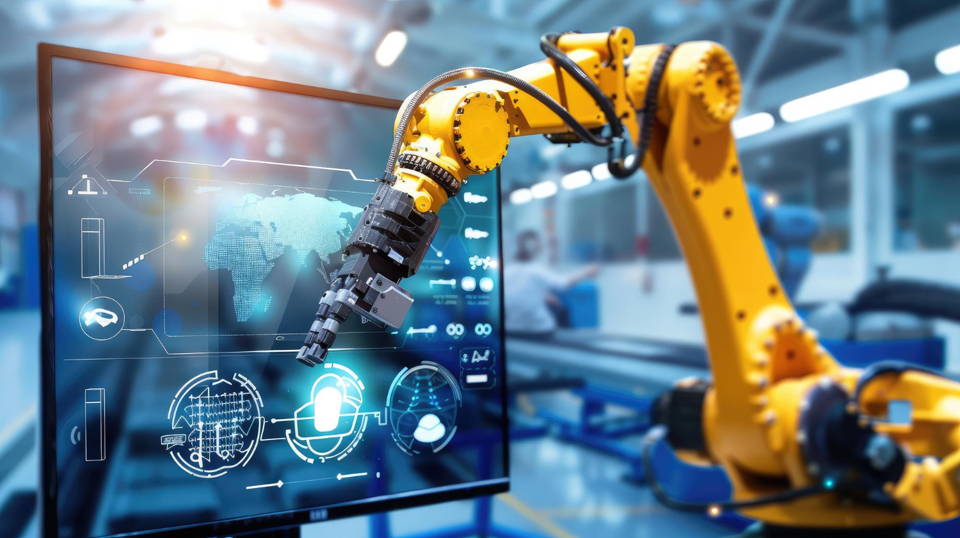
Industrial automation is being redefined by Edge AI, where intelligence is deployed directly on machines, sensors, and controllers rather than relying solely on centralized systems. By processing data locally, manufacturers can achieve ultra-low latency decision-making for critical tasks such as robotic control, quality inspection, and predictive maintenance. This shift reduces downtime, minimizes network dependency, and allows production lines to adapt in real time to changing conditions, whether that’s detecting defects instantly or optimizing machine performance on the fly.
At the edge, AI enables factories to move from reactive to proactive operations. Models running on industrial devices can identify early signs of equipment failure, balance workloads across systems, and ensure consistent product quality without sending sensitive data to the cloud. The result is a more resilient, efficient, and secure manufacturing environment, where automation systems learn continuously and respond immediately, unlocking the next level of smart, autonomous industrial operations. Here are some artificial intelligence applications in autonomous industrial systems:
- Machine health monitoring & predictive maintenance: Sensors and edge AI models continuously track vibration, temperature and operating patterns. This makes it possible to predict failures early and schedule maintenance before costly downtime occurs.
- Defect detection & dimensional measurement: Vision systems inspect products in real time to identify defects and verify precise dimensions. Edge AI ensures consistent quality while reducing manual inspection effort and errors.
- Material handling and AMR control: Edge AI enables autonomous mobile robots to navigate factory floors safely and efficiently. It allows real-time coordination, obstacle avoidance and task optimization without relying on cloud connectivity.
- Safety zone violation detection: Cameras and sensors monitor restricted areas around machines and hazardous zones. Edge AI instantly detects violations and triggers alerts to prevent accidents and injuries.
- Production line optimization: Real-time data from machines and sensors is analyzed directly at the edge. This helps identify bottlenecks, balance workloads, and improve overall throughput.
- Industrial quality inspection: High-speed cameras combined with edge AI inspect products at every stage of production. This ensures defects are caught immediately and quality standards are maintained consistently.
Still not sure?
Looking for smart solutions in retail, transportation or industrial automation but don’t know how to implement artificial intelligence? You can reach out to our team to discuss how to move forward. To see how you can implement edge AI in smart cities, sports and agriculture, you can check out our blog to learn more.
