

Empowering Robotics with Edge AI for Precision and Efficiency
Robots are among the first things that come to mind when future is mentioned. From sci-fi books to high-budget movies, robots have been portrayed as the magic helpers of the future. The robots in fiction can perform day-to-day tasks to reduce humans’ responsibilities or help them get things done. While we still don’t see that many robots around, this does not mean that they don’t have a place in society just yet.
Robotics is more than the humanlike helpers we would see in movies. If we were to take a closer look at the definition, robotics is the field of engineering and computer science focused on designing, building, programming and operating machines, which are called robots, that can perform tasks autonomously or semi-autonomously in the physical world. Based on this definition, though we don’t have robots in our kitchens cooking for us, we actually benefit from the service provided by a wide range of robots.
Robotics and AI
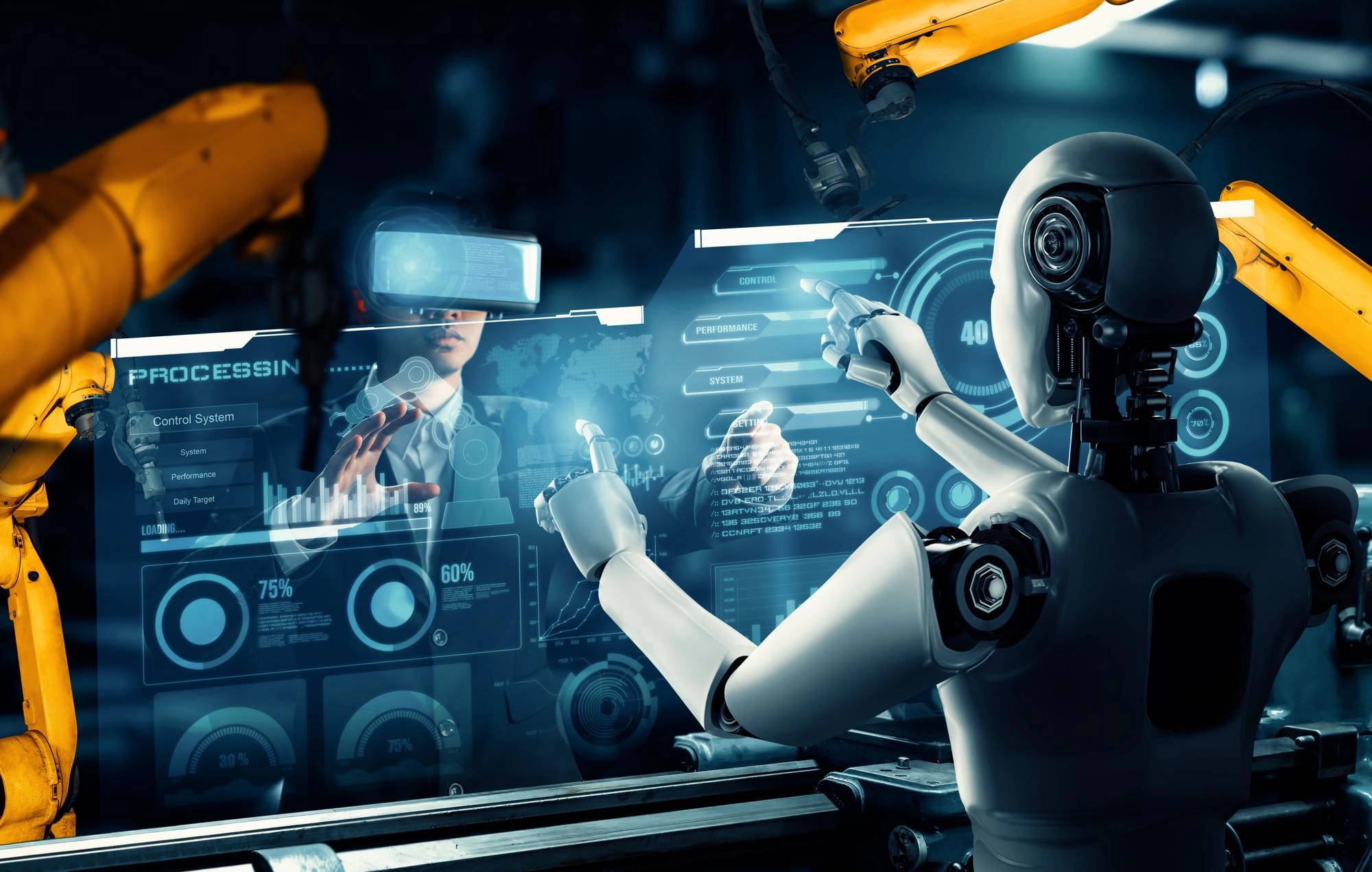
Robots, built on algorithms that enable automating tasks, are capable of numerous things, from contributing to production to operating in environments that may be unsafe or impractical for humans. Yet, following a pre-determined protocol is different than operating intelligently in dynamic, real-world environments. This is where artificial intelligence comes in.
Artificial intelligence enables robots to perceive their surroundings, learn from data, and make context-aware decisions. With the help of AI, robots can adapt to changes, recognize patterns and respond in real time rather than simply executing fixed instructions, unlocking higher levels of autonomy, precision, efficiency. But, how is AI used in robotics?
In order to take robots into the next level, artificial intelligence can be used to enable them to collect and analyze data real-time, then make decisions and perform completely autonomously. By embedding AI directly into robotic systems, robots gain the ability to interpret sensor data, recognize objects, predict outcomes and adjust their actions without human intervention. This real-time intelligence allows robots to operate with greater accuracy and reliability, even in fast-changing or unpredictable environments. As a result, robots move beyond automation and become adaptive systems capable of learning from experience, optimizing performance and delivering consistent results at scale.
How to Implement AI in Robotics?
Edge AI offers couple advantages that make it viable for various robotics manufacturers. First of all, as mentioned, latency is reduced to zero with Edge AI. This allows for real-time decision making, quick reactions and rich interactivity. Second, collecting and analyzing data at the edge protects it from leaking or being shared elsewhere. Given we foresee robots will be everywhere, data privacy becomes extremely important. Who would want a robot, whose cameras are not secured, to be in their home?
Beyond latency and data privacy, Edge AI also improves reliability and operational continuity. Robots operating in factories, warehouses, outdoor sites or remote locations cannot always depend on stable network connectivity. By running AI models locally, robots remain fully functional even when connectivity is limited or unavailable, ensuring uninterrupted operation in mission-critical environments. This also reduces costs that might come with ensuring systems are connected at all times. The need for expensive networking infrastructure, constant bandwidth usage and ongoing cloud compute expenses can be reduced by employing Edge AI systems, making long-term robotic deployments more economical.
Finally, Edge AI enables scalability and cost efficiency for robotic deployments. Processing large volumes of sensor data locally reduces the need for constant data transmission and cloud computing resources. This not only lowers bandwidth and infrastructure costs but also makes it easier to deploy and manage fleets of intelligent robots at scale, without overloading centralized systems.
Hardware for Edge AI Robotics
Hardware is undeniably one of the most crucial components when it comes to implementing edge AI. Choosing correct hardware ensures optimal performance, low latency, energy efficiency and reliable operation under real-world constraints. Different types of hardware used for Edge AI robotics projects include carrier boards, industrial computers and ruggedized PCs, each to meet specific application requirements.
Carrier boards are ideal for projects that require customization and compactness. Their small form factor makes them well suited for space-constrained and mobile robotics applications where energy efficiency and tailored hardware design are critical.
Among carrier boards, the DSBOARD-ORNXS features a highly compact design, making it ideal for robotics applications and deployments where space is limited. Its small form factor allows for seamless integration into mobile robots and drones where size, weight, and power efficiency are critical. Offering 157 TOPS AI performance, this carrier board fits a wide range of needs.
Another carrier board, DSBOARD-AGXMAX, delivering 275 TOPS of AI performance, stands out with its rich connectivity options, making it ideal for projects where high-speed data transfer, real-time communication and reliable performance are valued.
Industrial PCs are ideal for robotics as they combine high computational power, durability and expandability, which are essential for reliable operation in demanding environments. Industrial PCs also offer scalable performance, supporting powerful CPUs, GPUs, and AI accelerators needed for tasks like vision processing, sensor fusion and real-time decision-making. In addition, their rich I/O and expansion options make it easy to connect multiple cameras, LiDARs, motors, and industrial interfaces, while long lifecycle support ensures stability and maintainability over years of operation.
Among industrial PC options, DSBOX-THRMAX stands out as an ideal solution for robotics applications with its cutting-edge connectivity including QSFP+, dual USB-C with DisplayPort, and high-speed PCIe Gen5 storage. With Gigabit Ethernet, USB 3.2, HDMI, CAN, Serial Ports and Digital I/Os, compact and robust DSBOX-AGX offers unparalleled connectivity and functionality, fit for edge AI robotics solutions.
Want to know more?
FORECR has sold more than 9000 units of hardware worldwide, to be used in more than 800 projects. With its products being used in many countries around the globe, FORECR has proved itself as a reliable manufacturer of AI-ready hardware, along with custom system design and AI software solutions. If you’d like to explain how you can deployed edge AI in robotics, you can get in touch with our team!
Need help?
Frequently Asked Questions
