

Embedded systems in aerospace serve several purposes, ranging from route planning to predictive maintenance, autonomous flight to fuel optimization. Embedded system projects are highly customizable, experienced teams can tailor their solutions to fit customers’ needs without compromising power, durability and quality.
Flying Smart: Edge AI on Aerospace Missions
Artificial intelligence (AI) offers vast potential in every sector. While artificial intelligence is already everywhere and its adoption only gets faster by day, it is especially strong in some fields. Where AI systems shine the most is when there are complex, detailed solutions to be solved. When there are many variables to take into consideration, AI is a great helper in regard to making decisions, analyzing data and implementing solutions.
Aerospace operations are among the fields where artificial intelligence deployment offers high potential. As they are extremely complex structures, aerospace system designs have always been about managing trade-offs. Balancing speed, fuel consumption, safety, weight, routes, cost is a challenge, made easier to deal with thanks to AI in aerospace.
Aerospace Missions: Past, Now and Future
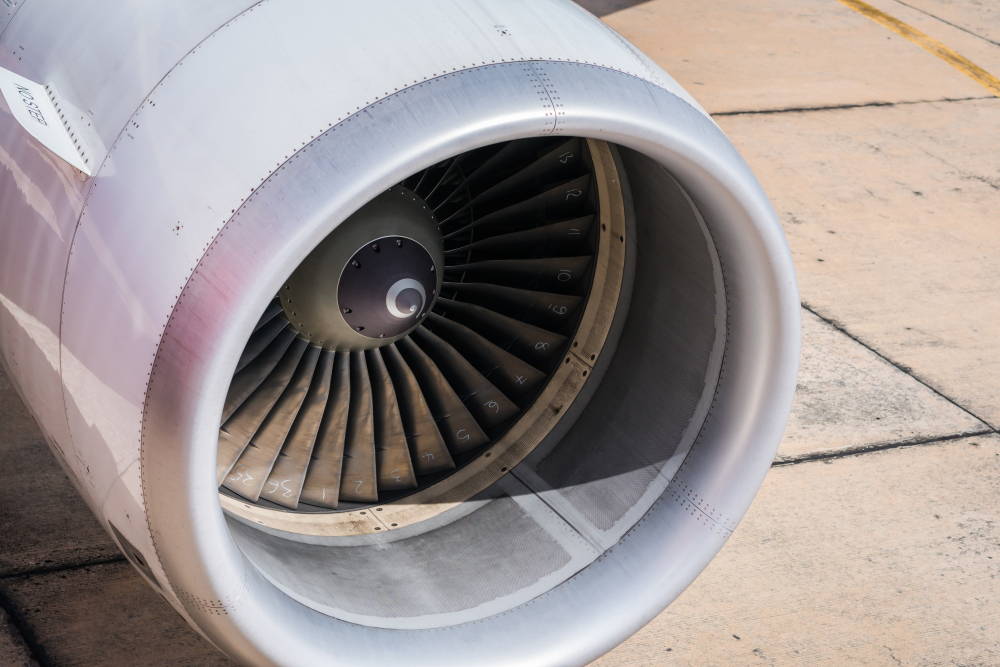
Aerospace has always been a step ahead in technological advancements. During the Space Race between the United States and the Soviet Union, the sector saw impressive innovations, ranging from the first artificial satellite to moon landing. The race was going on in front of everyone’s eyes, making it to headlines every day. This period laid the foundations for modern space technology while also drawing public attention, making aerospace a subject of interest for many.
In the present day, aerospace missions are still extremely popular, while also being diverse, collaborative and commercially driven. Missions now include satellite constellations for global communication, Earth observation for climate monitoring, and resupply missions to the International Space Station. Reusability of rockets and advancements in AI and automation have significantly reduced costs and increased the frequency of launches.
Looking toward the future, artificial intelligence is set to become the driving force behind aerospace innovation. AI will enable fully autonomous spacecraft capable of making real-time decisions without human intervention, which is critical for deep-space missions where communication delays are significant. From intelligent navigation systems and autonomous landing technologies to predictive maintenance and mission optimization, AI will enhance safety, efficiency, and mission success rates. As aerospace missions grow more complex, AI will not just support operations. It will fundamentally shape how missions are planned, executed and sustained.
Why Edge AI on Aerospace?
Edge AI is a critical advancement that enables data processing directly at or near the source. With aerospace embedded systems, AI models can run directly on the aircraft, rather than running on a cloud and communicating back-and-forth. Edge AI’s capacity to run anywhere is especially important in aerospace applications as these often take place in remote or harsh conditions.
Relying on could systems, rather than edge AI, would require the aircraft to be connected at all times. Any small disturbance in the internet connectivity would implicate the operation, resulting in unwanted circumstances. Even if constant connectivity could be ensured, latency would be a problem as data would need to travel back and forth between the aircraft and remote servers before decisions could be made. In time-critical aerospace scenarios, even milliseconds of delay can have serious consequences.

Lastly, data security could be compromised in systems relying on cloud connectivity. When transmitting data, there is always risk of it being breached. In critical situations, data breaches could result in failures that endanger wellbeing of people. Edge AI allows aerospace systems to operate more independently, maintain functionality during communication outages and handle unexpected situations more effectively.
Uses of Edge AI on Aerospace
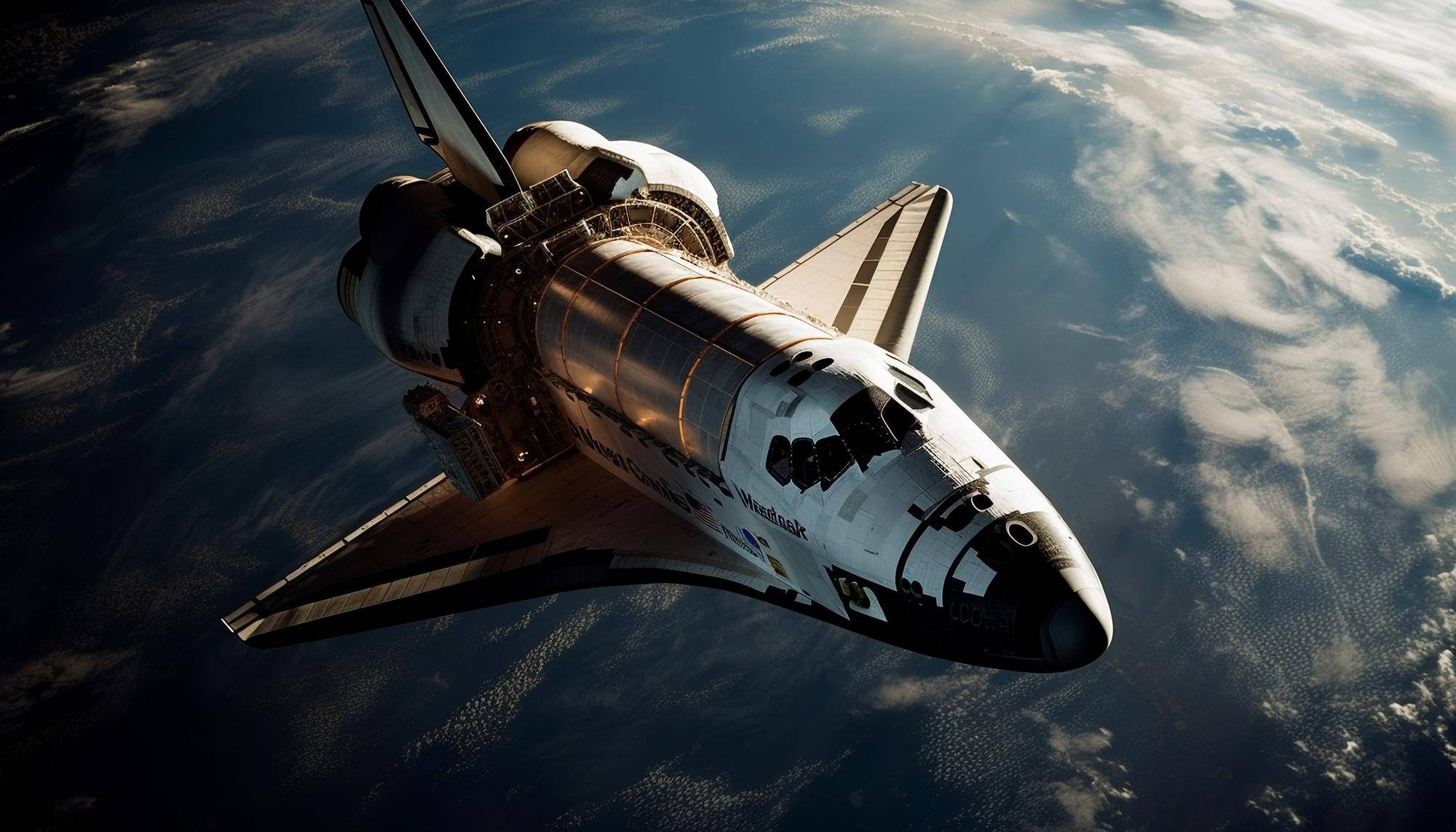
Edge AI on aerospace sector is not rare. From the production line to ground control, it is everywhere. Edge AI deployed on the automation line helps produce critical structures, improving quality control and optimizing supply chains. In addition, predictive maintenance helps keep aerospace equipment safe and working, after it has left the production line.
Applications of AI in the aerospace industry range from automating time-consuming computations to autonomous decision-making. Complex operational AI systeghvfgs ensure everything goes smoothly, while also collecting and analyzing data to enhance future operations. Leveraging embedded systems and edge AI is not optional anymore in today’s world. Instead, it is a must, to keep up with technological advancements and stay relevant in the competition.

Artificial intelligence can be deployed in every part of critical aerospace missions. Air traffic management systems can be enhanced with AI. Controllers are responsible for analyzing weather, aircraft performance, traffic patterns, making quick decisions which have an enormous impact on both aircrafts’ and people’s safety. AI helps professionals make better decisions by processing vast amounts of real-time data, identifying potential conflicts and suggesting optimal solutions faster than humanly possible.
Autonomous flight is another transformative application of artificial intelligence in aerospace. Aerospace embedded systems, running edge AI, enable aircrafts or drones to operate with minimal or no human intervention. These systems rely on aerospace computers, sensors, computer vision and machine learning to leverage the power of AI, especially in high-risk environments, such as military operations, disaster response, and cargo delivery in remote areas. Some missions may be too dangerous or impractical for human pilots and edge AI makes these possible without endangering anyone.
Hardware for AI on Aerospace
Choosing the correct hardware is critical in aerospace operations. At FORECR, our product lineup is designed to meet the demanding requirements of edge computing, AI deployment and autonomous systems in harsh and mission-critical environments.
NVIDIA’s Thor Module is designed for ultra-high-performance applications. Carrier boards with NVIDIA Thor modules enable advanced workloads such as autonomous navigation, multi-sensor fusion, real-time simulation and large-scale AI inference at the edge. DSBOARD-THRMAX focuses on mixed connectivity and supports camera expansion for AI vision, while military-grade Thor carrier board MILBOARD-THR is engineered for mission-critical deployments, offering enhanced ruggedization, isolated I/O interfaces, high-bandwidth multi-sensor connectivity and robust data handling capabilities for defense and aerospace environments.
Ruggedized computers offer high performance combined with great durability in embedded systems in aerospace. If we were to compare tactical mission computers for aerospace applications, we could consider MILBOX-THR, MILBOX-AGX or MILBOX-AGXMAX.
The MILBOX-THR is a military-grade rugged Edge AI computer powered by NVIDIA Jetson AGX Thor, delivering up to 2070 TFLOPS of AI performance for advanced inference, sensor fusion, and real-time autonomy at the tactical edge. Designed to meet stringent MIL-STD and IP67 requirements, it combines high-speed connectivity (4× 10G Ethernet, SDI/HDMI), isolated industrial I/O, and PCIe Gen5 expansion to ensure reliable, high-bandwidth operation in extreme aerospace and defense environments.
The MILBOX-AGX is a military-grade rugged fanless PC powered by NVIDIA Jetson AGX Orin, delivering high-performance AI computing with efficient power usage for real-time analytics and autonomous operations at the edge. Designed for harsh environments, it features extensive industrial connectivity (Gigabit Ethernet, CAN, serial interfaces) and complies with MIL-STD and IP67 standards, ensuring reliable 24/7 operation in aerospace, defense, and other mission-critical applications.
The MILBOX-AGXMAX is a military-grade rugged fanless computer powered by NVIDIA Jetson AGX Orin, delivering high-bandwidth edge AI performance with 10G Ethernet and multiple Gigabit ports for real-time data processing and decision-making. Designed for mission-critical environments, it features extensive industrial I/O, flexible storage and camera expansion, and compliance with MIL-STD and IP67 standards, ensuring reliable operation in aerospace, defense, and harsh field deployments.
Want to know more?
Are you curious about where the future of aerospace is heading, or want to explore how you can be a part of it with edge AI solutions? Our team would be more than happy to get the conversation going to understand your priorities. Get in touch with FORECR sales team to get to know our product line, use cases and possible collaboration paths.
Frequently Asked Questions
How can embedded systems be used in aerospace?
How to use AI on aerospace?
Artificial intelligence is integrated to aerospace solutions by embedded systems. Carrier boards, industrial PCs or ruggedized computers have the capacity to deploy artificial intelligence right where the data is, on the aircraft itself in this case. This way, the aircraft does not need to be connected to a cloud at all times.
