

Powering AI in Energy Sector - Embedded Systems for Energy
U.S. Department of Energy frames artificial intelligence (AI) as a transformative tool for energy and highlights that AI enables energy innovation and decarbonization. The International Energy Agency (IEA) also states that AI “can help optimize complex energy systems”, making energy more sustainable, reducing waste and costs, enhancing reliability. To make these outcomes practical and scalable, edge-AI solutions powered by NVIDIA Jetson enable real-time AI applications directly at the point of energy generation, distribution, and consumption. By performing low-latency, energy-efficient inference at the edge, such systems reduce dependence on cloud connectivity, improve resilience, and support autonomous decision-making in applications such as smart grids, renewable energy integration, predictive maintenance, and energy-efficient industrial operations.
How Does AI Help Energy Sector?
There are various ways smart energy infrastructures can contribute to the energy sector. AI enables data-driven decision making, automation, and real-time optimization, making systems more resilient, cost-effective, and sustainable.
Research shows that oil and gas industry has adopted AI and smart systems early, using them to optimise workflows. With the help of edge AI, this industry performs tasks related to exploration, production, maintenance and safety in increasingly efficient ways.
Embedded edge-AI solutions make it easier to assess, understand and govern complex, decentralised and digitalised networks like electricity or transformation. With the help of computing, forecasting various different variables at the same time and detecting when to act becomes faster, more accurate, and more reliable in real time. Energy solutions are in demand and harnessing the power of technology for it is inevitable.
Here are some applications of AI in energy sector:
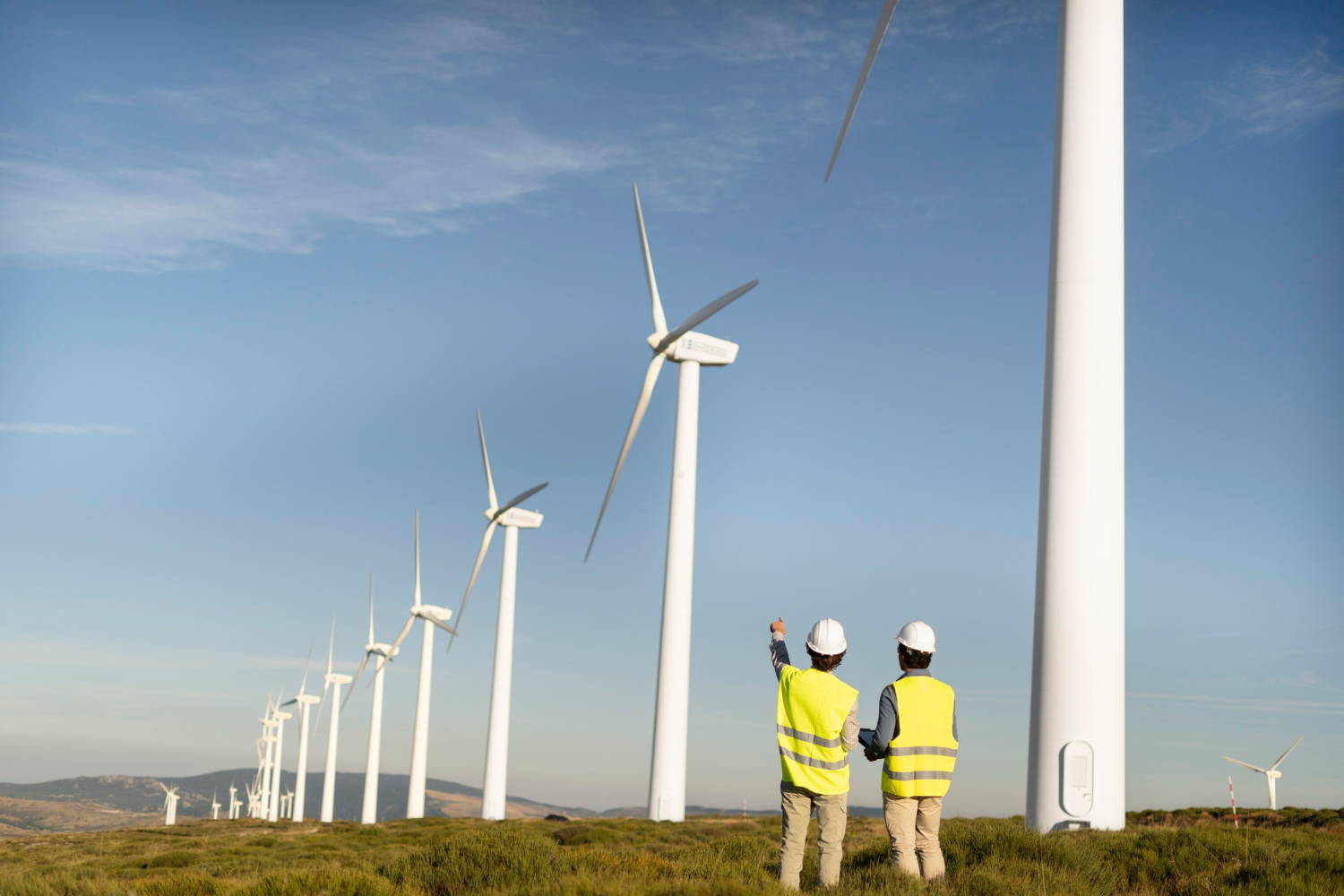
• Wind turbine blade damage analysis: Identifies cracks, wear, and structural defects in wind turbine blades to enable proactive maintenance.
• Critical infrastructure monitoring: Continuously monitors assets such as bridges, dams, and energy facilities to detect risks at an early stage.
• Solar panel efficiency inspection: Analyzes dirt, damage and performance losses in solar panels to improve overall energy output.
• Powerline fault detection: Detects faults such as breaks, overheating, or insulation failures in power transmission lines.
• Pipeline leak detection: Identifies leaks in pipelines early to prevent environmental damage and financial losses.
• Smart meter analytics: Analyzes smart meter data to uncover consumption patterns, inefficiencies potential energy theft, and more.
Use Cases of Edge-AI in Energy Sector
You can consult our FORECR & CleanConnect.ai Success Story. The collaboration between FORECR and CleanConnect resulted in:
• Enhanced Processing Power: Carrier boards provided by FORECR enable CleanConnect’s product Minerva's high-speed, on-edge processing. The processing capabilities allow real-time data analysis and immediate hazard detection without off-site computing, which reduces latency.
• Industrial Durability: Rugged hardware ensures Minerva's operations in extreme industrial conditions are reliable. The ruggedized hardware provided by FORECR ensures long-term usage and minimizes maintenance needs.
• Compact Design: FORECR’s integrated sensor and camera setup help reduce Minerva's footprint, streamlining installation and making the system easier to deploy and maintain.
• Energy Efficiency: FORECR’s energy-efficient design supports Minerva's 24/7 operation with low power consumption. This aligns with CleanConnect's commitment to sustainable operations and effectively reduces costs.
Hardware for Smart Energy
Carrier boards, ruggedized computers and industrial PCs make it possible to implement edge-AI solutions in various sectors including energy, healthcare, transportation and more.
In order to work in such a vast range in sectors, there are some qualitifactions the hardware must have. First of all, whether it is a carrier board, industrial PC or ruggedized computer, the product must be durable enough to withstand demanding conditions. This is achieved by combining high quality material with expertise to build systems that can endure.
Second, the systems must be powerful. To meet customers’ needs, embedded systems must carry the state-of-art components, examples including NVIDIA® JETSON AGX THOR™, NVIDIA® Jetson AGX Orin™ and many more.
Lastly, customization is really important. There are instances where some modifications have to be done so as to make the embedded systems the most suitable for customer’s needs. Working with a provider who offers this service ensures that you can benefit from the expertise and experience offered by them to find the best solution in accordance with your demands.

Carrier Boards for Smart Energy Solutions
Powered by NVIDIA Jetson AGX Orin, DSBOARD-AGXMAX is built for high-throughput, low-latency edge AI applications where performance and connectivity matter. Offering up to 275 TOPs of performance, DSBOARD-AGXMAX is ideal for demanding industrial applications, further supported by its endurable design.
DSBOARD-ORNX combines industrial reliability, edge AI performance, and rich field connectivity, all of which are critical in modern power, utility, and energy-infrastructure systems. DSBOARD-ORNX supports a wide operating temperature range of –25°C to +85°C, industrial-grade power input and high MTBF (~20 years) for long-term deployments.
Industrial PCs for Smart Energy Solutions
DSBOX-AGX, supporting NVIDIA Jetson AGX ORIN, is an industrial fanless box with a robust design. Thanks to its durable structure, DSBOX-AGX is perfect for energy sector. You can choose SOM options, industrial SSD size, connectivity integrations, making sure the robust computer you are ordering is compatible with your project. If you are looking for 10G connectivity, you can choose DSBOX-AGXMAX for its advanced connectivity options. Providing 2070 FP4 TFLOPS of AI compute and 128 GB of memory, DSBOX-THRMAX is another great option if you require more AI power.
DSBOX-ORN, powered by either NVIDIA Jetson Orin Nano 4GB or NVIDIA Jetson Orin Nano 8GB, delivers exceptional computing power for demanding industrial applications. It is durable enough to be employed in harsh environmental conditions while its compact design allows for easy integration into existing systems, making it perfect for smart energy solutions. A similar product, DSBOX-ORN-LAN provides Dual LAN connectivity as well as heat dissipation and shock protection. If you are looking for all of these features combined with an Orin NX–based processor, we would kindly suggest taking another look at FORECR’s broad product portfolio, as we offer a very wide range of solutions. In this context, we would like to highlight our Jetson Orin NX–based systems, specifically the DSBOX-ORNX and DSBOX-ORNX-LAN products, which may be a good fit for your requirements.
Conclusion
AI in energy sector is where the future is headed towards. Deploying edge AI solutions in wind turbines, solar panels, in power transmission lines and other components on energy sector improves efficiency while reducing costs. In order to implement solutions that will run without facing problems and last years, it is crucial to pick the best hardware for your projects. At FORECR, we offer carrier boards, industrial PCs and ruggedized computers suitable for a wide range of needs. You can check our products or reach out to learn more!
Looking for smart energy solutions?
FORECR combines expertise with proven industry experience to deliver cutting-edge hardware solutions for the energy sector. Through our embedded system solutions, we enable high-performance, reliable and scalable implementations across modern energy infrastructure, from generation and distribution to monitoring and optimization.
Need help?
Frequently Asked Questions

