

Edge AI in UAVs: Transforming Drone Intelligence in Real Time
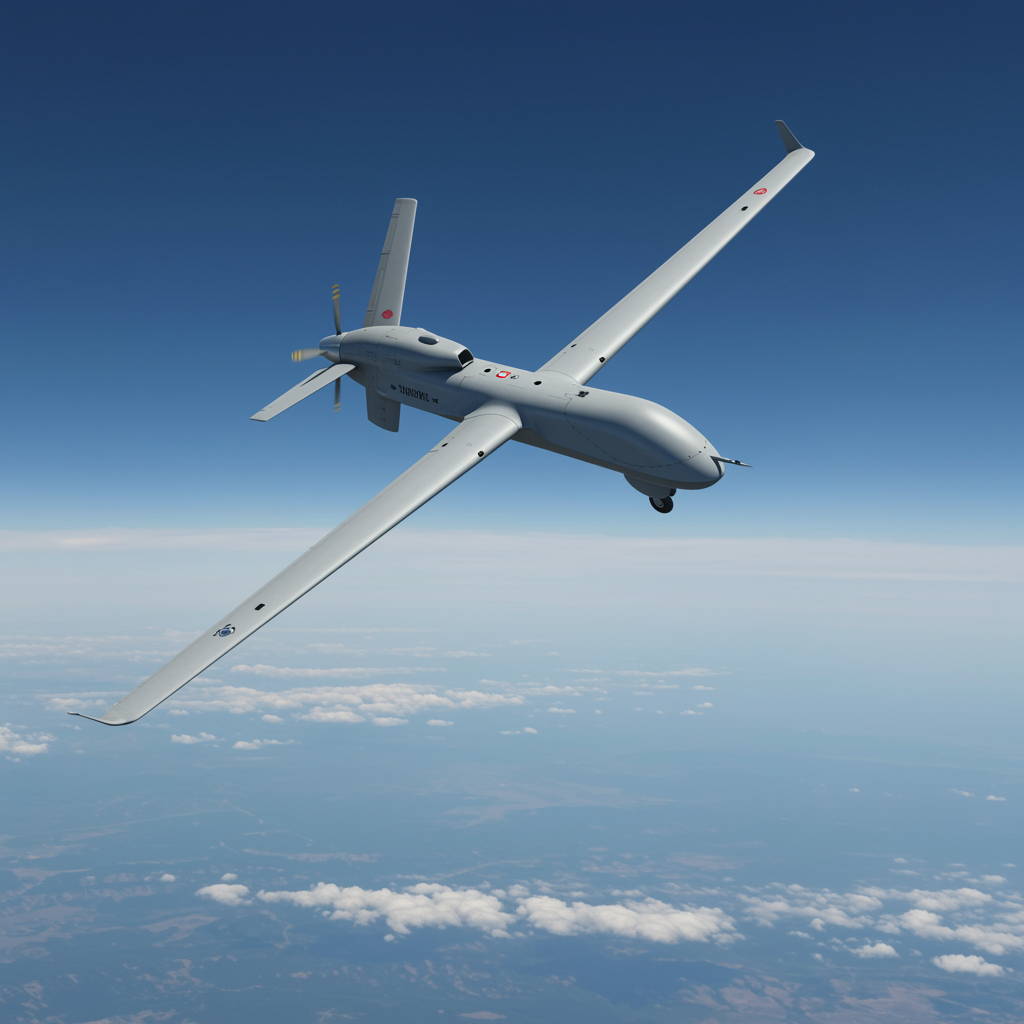
Unmanned Air Vehicles, also known as UAVs or drones, are simply aircrafts without any humans on board. UAVs can fly with a human operator controlling them remotely or autonomously. While people may think UAVs are made for offensive purposes only, they are actually deployed in many different sectors, from agriculture to automative.
The broad range of UAV applications means there are several types of them, with different specifications. Purpose-built UAVs carry modules that would not be feasible for other applications. It is possible to enhance industrial and military UAVs with cameras, communication modules or other payload systems depending on the mission requirements. Artificial intelligence can also be integrated into UAV systems to enable autonomous navigation, real-time data processing, object detection and decision-making without constant human control. To discover more about how to integrate AI into drones, first take a look at how this is made possible with edge AI.
Definition of Edge AI
Edge AI is deployment of artificial intelligence right where the data is, in other words, on the “edge” of the system. This edge might be below the surface level, high above in the clouds, in the mud, in the artctic… It is almost impossible to be connected to a cloud server for AI compute in such environments. This is where edge AI comes in. As edge AI systems operate without connectivity, they can be deployed anywhere without any constraints.
Embedded systems and edge AI are perfect for industrial UAVs for different reasons. First, drones operate in high speeds or challenging environments. All electronic hardware located in the UAVs have to withstand shock, vibration, dust and moisture. Edge AI systems are often designed to operate smoothly in such conditions. Second, ensuring constant connectivity in the situations where UAVs operate is a challenge. Edge AI can operate without any connection, making it perfect for advanced drone operations. In addition, data security is crucial in operations which require UAVs.
Introduction to UAV Tech
Unmanned Aerial Vehicles (UAVs), commonly known as drones, are aircraft that operate without a human pilot onboard. They can be remotely controlled by operators or fly autonomously using onboard computers and navigation systems. Industrial UAV technology has evolved rapidly over the past two decades due to advancements in sensors, batteries, communication systems, and miniaturized electronics. These developments have made commercial drones more accessible, efficient, and capable across many industries.
Originally developed primarily for military applications such as surveillance and reconnaissance, commercial UAVs are now widely used in civilian sectors. Industries including agriculture, construction, logistics, filmmaking, disaster management, and environmental monitoring rely on drones for data collection and operational efficiency. Their ability to access difficult or dangerous locations makes them extremely valuable for tasks that would otherwise be costly, time-consuming, or risky for humans.
Modern UAV systems typically consist of several key components, including the airframe, propulsion system, sensors, communication modules, and flight control systems. GPS technology and onboard processing units enable drones to navigate autonomously and perform complex missions. As UAV technology continues to advance, it is becoming increasingly integrated with artificial intelligence, allowing drones to perform smarter and more autonomous operations.
AI in Drones
Artificial Intelligence (AI) plays a crucial role in enhancing the capabilities of modern drones. By integrating AI algorithms with onboard sensors and processors, drones can analyze data in real time and make intelligent decisions during flight. AI enables drones to perform complex tasks such as object detection, terrain mapping, and autonomous navigation without constant human intervention.
One of the most important applications of AI in drones is computer vision. Through cameras and machine learning models, drones can identify objects, track targets, recognize patterns, and detect obstacles. This capability is widely used in areas such as surveillance, search and rescue operations, wildlife monitoring, and traffic analysis. Computer vision allows drones to process visual data quickly and respond to changing environments.
AI also improves flight efficiency and safety. Machine learning algorithms can optimize flight paths, predict system failures, and adapt to environmental changes such as wind conditions or obstacles. With AI-powered navigation and decision-making systems, drones can operate more independently and complete missions with higher accuracy and reliability.
Implementing Artificial Intelligence in UAVs
Implementing artificial intelligence in UAV systems involves integrating hardware, software, and machine learning models to enable autonomous capabilities. This process typically begins with collecting large datasets from sensors such as cameras, LiDAR, GPS, and inertial measurement units. These datasets are then used to train machine learning models that allow the UAV to recognize patterns and make decisions during flight.
AI implementation also requires powerful onboard computing platforms capable of processing data in real time. Technologies such as edge computing, embedded GPUs, and specialized AI chips allow drones to run complex algorithms directly on the device rather than relying solely on cloud processing. This reduces latency and enables drones to respond immediately to environmental changes.
Another critical aspect of implementing AI in UAVs is system integration and testing. Engineers must ensure that AI algorithms work seamlessly with the drone’s flight control system, navigation modules, and safety protocols. Continuous testing, simulation, and updates are necessary to improve performance and reliability. As AI technologies continue to advance, UAVs will become more autonomous, efficient, and capable of handling increasingly complex missions.
Products for UAV Technology
Choosing the right hardware is crucial for advanced UAV operations. In mission-critical scenarios, there is no room even for the slightest mistake as any problem can have an immense cost. The hardware to be used must support the necessary connections, withstand harsh environmental conditions and meet technical specification requirements. With its wide product portfolio, FORECR offers a diverse range of options for you to choose from.
Carrier boards are durable, versatile and powerful. They are ideal for manufacturers or product developers who want to integrate AI into their own devices, control the exact ports and features and design compact or specialized systems. MILBOARD-THR, with its formidable NVIDIA Jetson T5000 and T4000, delivers exceptional AI performance for mission-critical edge applications. Its extensive connectivity options and low power requirements make it ideal for challenging artificial intelligence drone operations. Another great carrier board option for defense industry applications is MILBOARD-AGX. This NVIDIA Jetson AGX Xavier carrier board supports high-speed data transfer and 4K video display via DP 1.4, making it perfect for high-definition video applications like computer vision. MILBOARD-AGXMAX, with its capability to work in a wide range of temperatures, is engineered to support NVIDIA Jetson AGX Orin modules, delivering high AI performance for demanding edge computing workloads.
Ruggedized computers are designed specifically to endure challenging field applications. Their durable design makes them the perfect solution for UAV deployment. FORECR’s ruggedized PCs are designed for a wide range of needs, each tailored to your projects. MILBOX-THR delivers unprecedented AI performance while also meeting MIL-STD-810G, MIL-STD-461G, MIL-STD-704F, MIL-STD-1275E, and DO-160G standards. MILBOX-AGX stand out with its extensive connection options including with 4x Gigabit Ethernet ports, USB 3.1, HDMI, 2x CAN Bus, and 4x RS232/4x RS422 interfaces, along with lightning-fast storage performance provided by M.2 SSD support and 64 GB eMMC flash memory.
Edge AI in UAVs Use Case
The Airbus Defence and Space & FORECR case study highlights how advanced edge AI solutions are transforming real-time ISR (Intelligence, Surveillance, and Reconnaissance) operations in aerospace and defense.
Airbus' usage focuses on deploying real-time image processing capabilities on UAVs to enable object detection and recognition directly from live video streams. A key challenge was building a system capable of delivering high computational performance while maintaining reliability under harsh conditions such as extreme vibrations and temperature variations. To address this, Airbus partnered with FORECR to integrate the MILBOX AGX platform powered by NVIDIA Jetson AGX Orin, offering high GPU performance, seamless integration with AI frameworks, and robust hardware design tailored for aerospace applications.
As a result, the solution significantly enhanced ISR operations by enabling low-latency AI processing, real-time analytics, and improved operational efficiency. The rugged system ensured stability in demanding environments, while its advanced computing power supported high-resolution video processing and accurate object detection.

Need help?
Frequently Asked Questions
